
A month ago, two little parrots became special friends of the Happy Planet Class. With these two animal companions now in the classroom, how has the children's daily life changed?
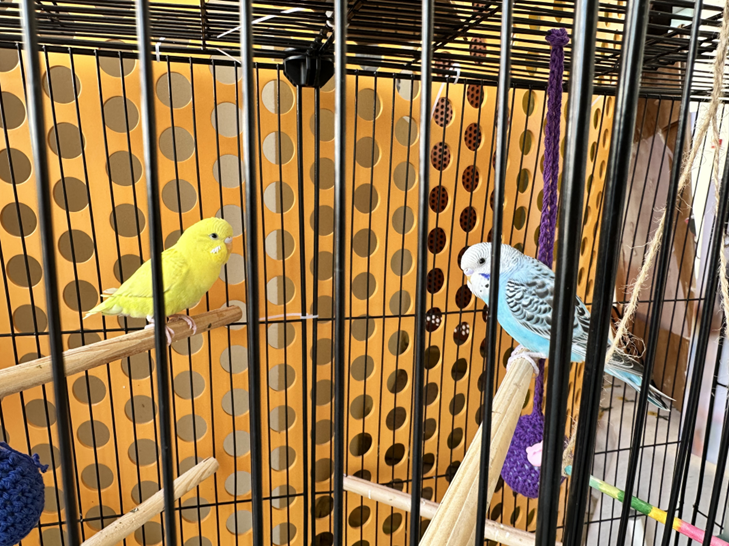
This project originated from the children’s interests. It is a newly formed class, with children transferring from different kindergartens. When we invited them to help build our classroom community, they voted on various ideas—and one of the most popular suggestions was keeping pets. In response to their enthusiasm, we shaped the project theme around “My Animal Friends.”
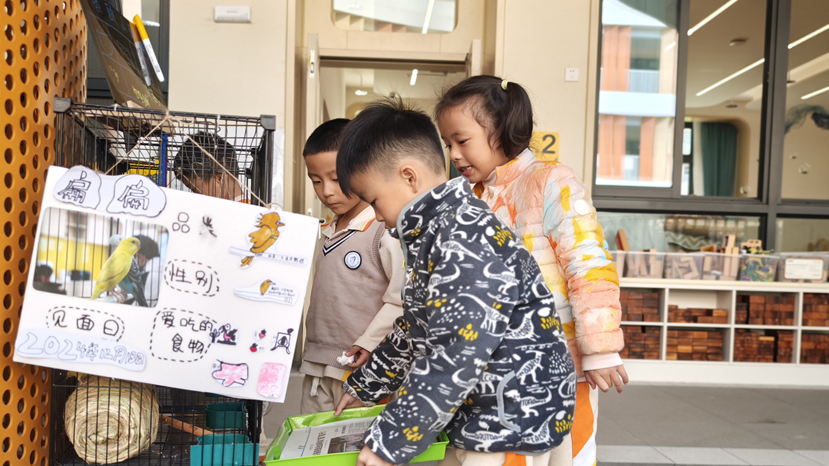
During the group voting, children had different ideas about what kind of animal to keep, and each strongly held onto their own opinion. To help resolve this, the teacher introduced debate as a way forward: “Try to persuade each other through a debate.”
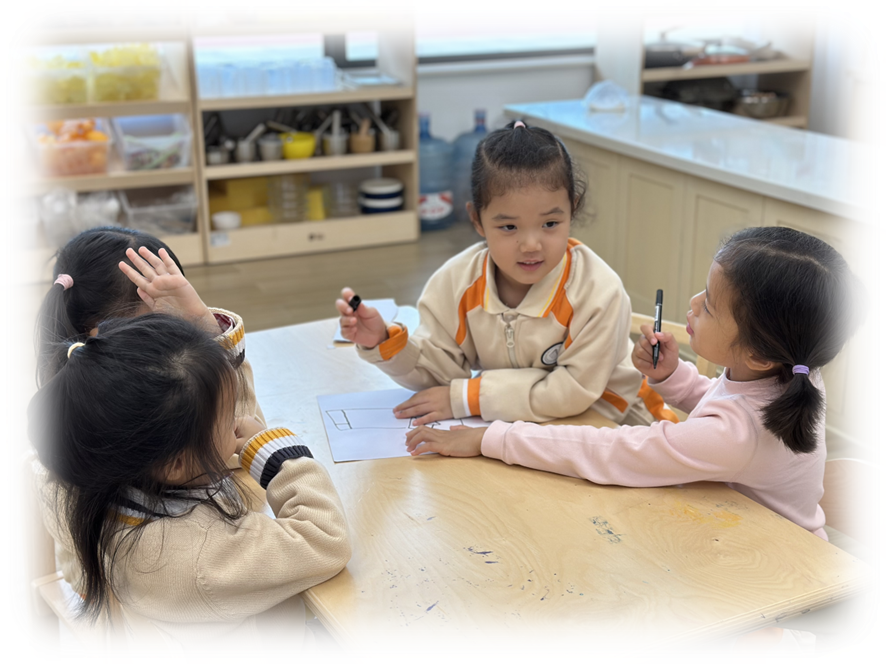
However, in the first debate, the children focused primarily on volume—what they said didn’t matter as much as who shouted the loudest.
The teacher promptly paused the activity and worked with the children to learn the basic rules of debating. Thus, the second round began. Both sides presented their reasons for wanting to care for a particular animal. Yet the teacher soon noticed that the children were simply reciting their pre-prepared points without listening to each other—let alone responding or rebutting.
So, the challenge was raised another level. The teacher introduced structured roles: first speaker, second speaker, third speaker, and fourth speaker. The results were impressive—the children engaged in a genuine debate. They clearly expressed their own views, actively listened to others, and tried to persuade their peers:
“Parrots can talk—it’s really fun!”
“Even though parrots can talk, their constant chirping might disturb everyone.”
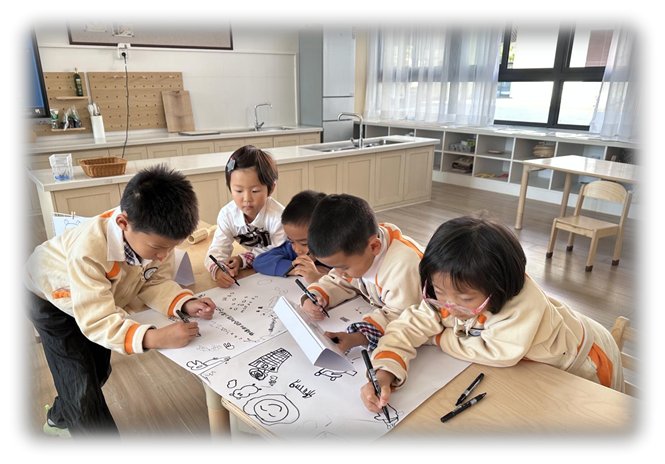
After three rounds of debate, the children evolved from believing “the louder you shout, the more right you are” to expressing simple opinions, and eventually progressed to analyzing issues from multiple perspectives, listening to others’ viewpoints, and offering thoughtful rebuttals. Their empathy, communication skills, and critical thinking all grew significantly.
Even the quietest child, who had previously rarely spoken up, found their voice—thanks to the carefully designed process.
At the end of the debates, the parrot group emerged as the winner. The children were eager to buy parrots right away. However, caring for a living being isn’t a momentary impulse—it requires ongoing time, effort, and commitment. Instead of immediately bringing the parrots into the classroom, the teacher posed a new question: “How can we properly take care of a parrot?” This question transformed learning from a matter of interest into an opportunity to cultivate responsibility.
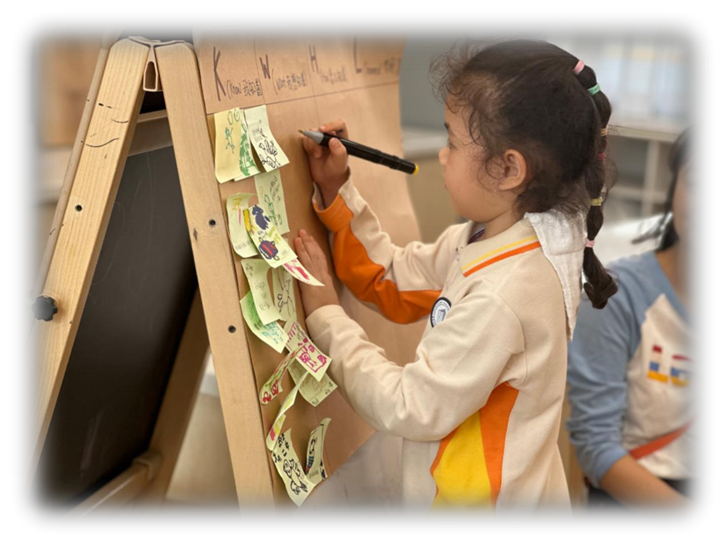
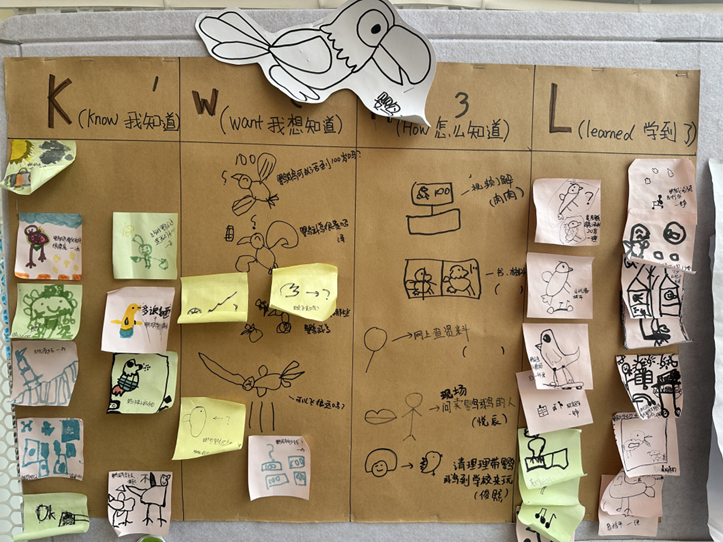
The KWHL chart helped children visualize their scattered thoughts and share their thinking with everyone. After organizing what they already knew and what they still needed to learn, the children realized there was a lot they needed to understand in order to properly care for a parrot. At this point, one child suggested inviting Lili’s dad—who actually owns pet parrots—to help answer their questions.
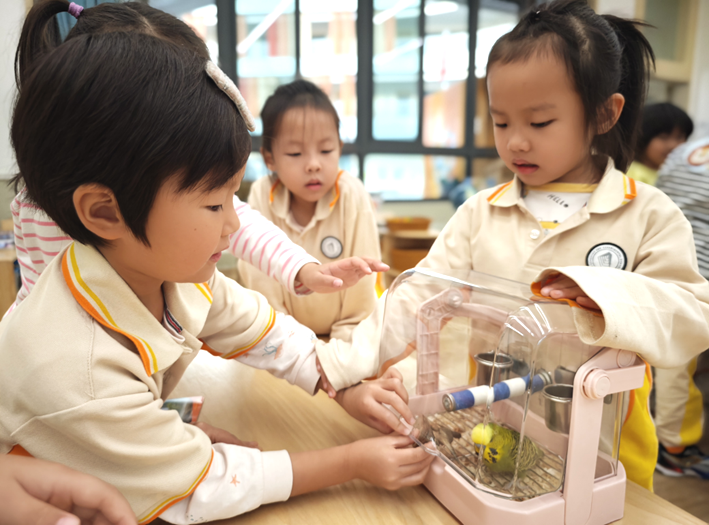
Parents participated in the project as "parrot experts," naturally connecting classroom learning with family and kindergarten life. The involvement of community partners made the children’s exploration of parrots more authentic and concrete. This was also the children’s first direct encounter with real, living parrots. Through this face-to-face interaction and hands-on experience, they not only learned how to care for parrots but also developed an even deeper interest in doing so.
Next, the children began purchasing the parrots and related supplies, naturally integrating mathematics into the project. With a set budget for buying the parrots, they compared planned expenses with actual costs, strengthening their mathematical reasoning. Driven by the children’s own ideas, they created a double-bar graph to visualize their data—demonstrating their growing ability to collect, organize, and interpret information. Through this hands-on project work, their Zone of Proximal Development was continually expanded.
However, after the parrots arrived, an unexpected event occurred—one of the parrots died. The teacher recognized this as a valuable opportunity for life education. In everyday life, we often avoid talking about death, which makes it difficult to develop a healthy, open attitude toward loss, separation, and farewell.
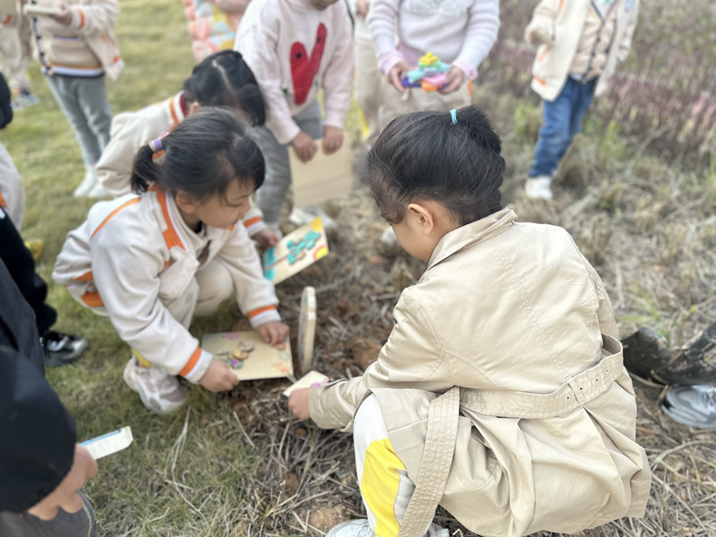
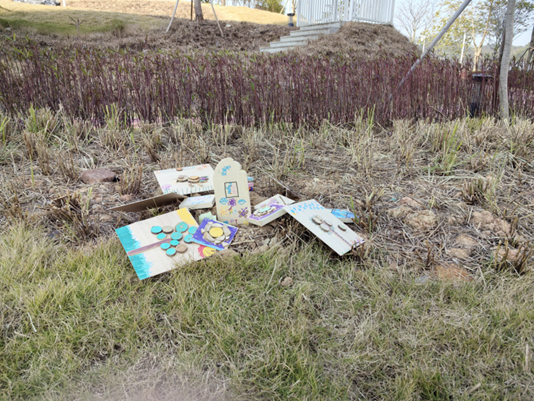
Through the picture book, the children expressed their wish to hold a funeral for the little parrot, "Little Rainbow." In woodworking class, they crafted various gifts for Little Rainbow. They chose the highest and warmest spot on the west side of Flower and Fruit Hill, hoping that Little Rainbow could see the most beautiful views from there. At the funeral, they conveyed their apologies, reluctance to part, and well-wishes for Little Rainbow.
"Little Rainbow, I'm sorry, I was too noisy."
"Little Rainbow, I will come to see you."
They also developed their own reflections and understanding about life and death:
"To continue living, to live on beneath the grass."
"I hope Little Parrot can be happy in another world."
These activities allowed the children to explore and comprehend the profound themes of life and death through their expressions of grief and remembrance.
After saying goodbye to Little Rainbow, the children truly became more responsible in caring for the surviving parrot. They created a "Parrot Care Agreement," taking turns each day to change its water and food and observe its condition. In the classroom, their voices grew noticeably gentler, and they reminded one another: “If you do that, the parrot will feel uncomfortable.”
In this way, the issue of some children being unable to control their volume when excited was naturally resolved—without direct intervention. This reaffirmed our belief in the power of project-based learning: authentic, meaningful experiences can transform behavior far more effectively than repeated verbal instructions ever could.