
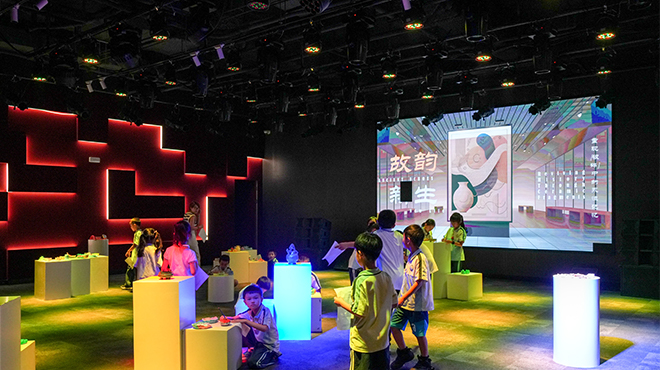
The Primary Division’s Drama in Education curriculum centers on keen artistic insight and broad global competence, integrating emotional development, creativity cultivation, and Social and Emotional Learning (SEL) into a cohesive, mutually reinforcing educational whole. Moving beyond fragmented theatrical experiences, we have developed a systematic and rigorous inquiry-based curriculum framework. Through rich, immersive scenarios, students are guided to explore culture, history, life, and humanity itself within dramatic forms.
Serving as a dynamic practice ground for SEL, our classroom creates authentic contexts in which students—driven by the narrative needs of advancing the drama—actively apply and internalize critical thinking, empathy, and collaborative problem-solving skills. As they learn to understand emotions, navigate challenges, and discover their own identities, students holistically develop essential competencies. Ultimately, through sustained engagement with drama, they cultivate the capacity for well-being and happiness.
This curriculum framework is built upon three interdependent and mutually reinforcing core pillars, ensuring that in every drama lesson, students achieve a spiraling progression from sensory experience to rational understanding through the dynamic shift between “entering” and “exiting” the dramatic world. This process fosters comprehensive and systematic development across three dimensions: knowledge acquisition, cognitive advancement, and character formation.

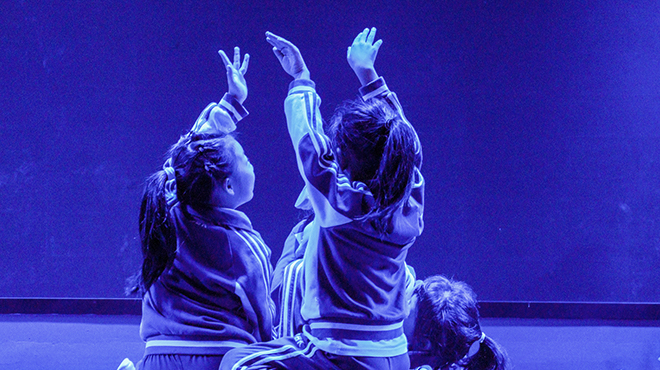
Theatre in Education (TIE) is a specialized art form distinct from Drama in Education. Rather than having students directly assume roles and immerse themselves in narrative scenarios for exploration, TIE introduces professionally staged performances—delivered by “actor-teachers”—as both pedagogical tools and aesthetic objects. At the Primary Division of Bubugao Experimental School, we adhere to the guiding principle of “one theme per academic year.” Through this high-quality, highly engaging artistic approach—which differs markedly from everyday classroom instruction—we aim to guide students beyond the cognitive boundaries of conventional lessons and create for them a “public forum” characterized by aesthetic distance. As spectators endowed with the right to intervene, students observe, analyze, and actively engage with theatrical conflicts, projecting their personal experiences onto the stage. In this deep interaction with the artwork, they undertake profound explorations of self-awareness, social relationships, and real-world issues.