
We regard education as a solemn and beautiful cause, and devote ourselves to it.
Education is an encounter, the collision of life and life, the echo of love and love.
As lifelong learners, we will flourish to ignite the inner light of every young life.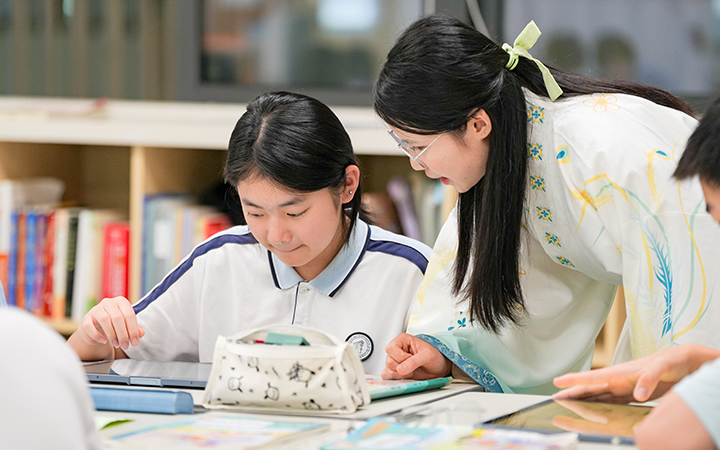
We firmly believe that every life deserves to be fully seen. Through the 1:5 teacher-student ratio and "one mentor in a lifetime", teachers can deeply understand the characteristics and needs of each student, provide coherent and accurate personalized support at the critical stage of growth, and let education truly return to the growth of "people".
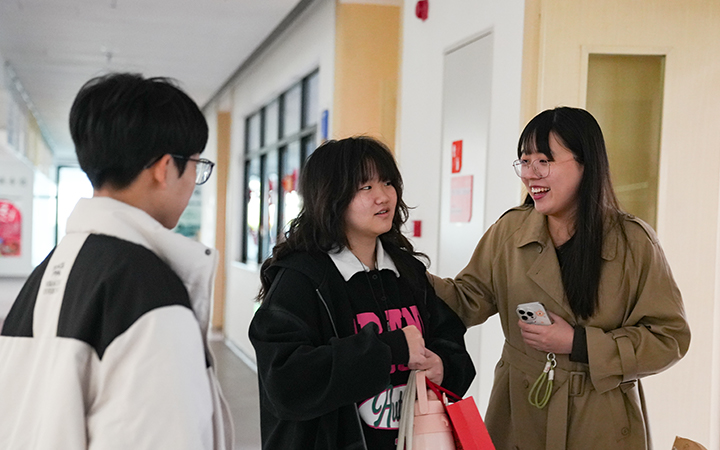
The average age of the teaching team is 29.5 years old, not only with diverse teaching experience, but also with youthful vitality and open-mindedness.They are the guides in the classroom and the partners who students are willing to share their voices with We jointly build an equal, trusting and dynamic teacher-student relationship.
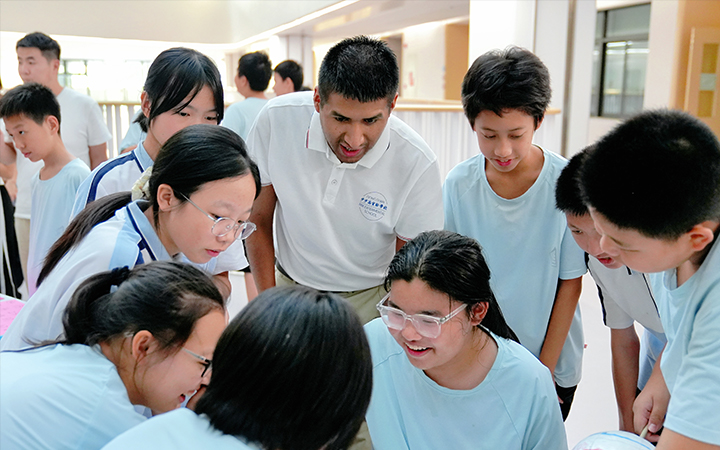
Our teaching team not only has profound academic literacy, but also is committed to integrating academic cutting-edge perspectives and research-oriented thinking into the teaching scene. Beyond traditional knowledge transmission, design in-depth exploration topics from an interdisciplinary perspective, cultivate students' critical thinking, innovative awareness and practical ability through project-based learning and real problem solving, and form a comprehensive literacy to meet future challenges.
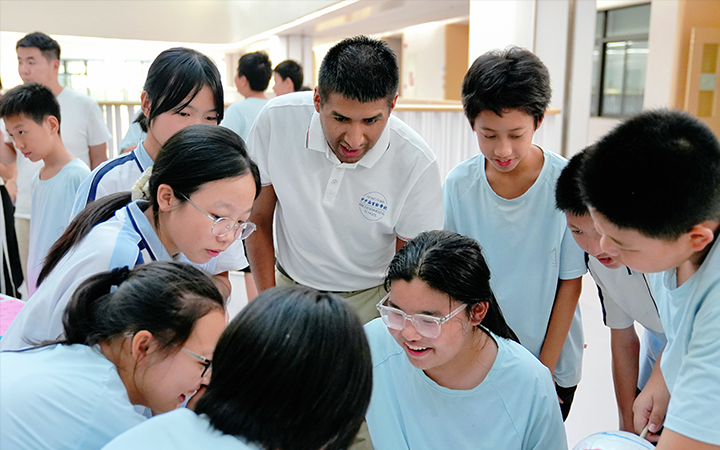
Under the technological iteration and social changes, how to cultivate forward-looking literacy to respond to the future and ensure that the learning content is deeply compatible with the needs of students' life growth and social development?
This is not the accumulation of knowledge, but a continuous question of "what to teach" and "why to teach", the end of which is to empower students to become active builders of knowledge and responsible innovators.
Regular in-depth analysis of subject cases, collision of thinking in interdisciplinary research, and fixed project-based learning workshops held every semester are all aimed at the educational practice of future schools.
In the midst of innovation and breakthrough, we are constantly having a profound dialogue on the vitality of the curriculum.
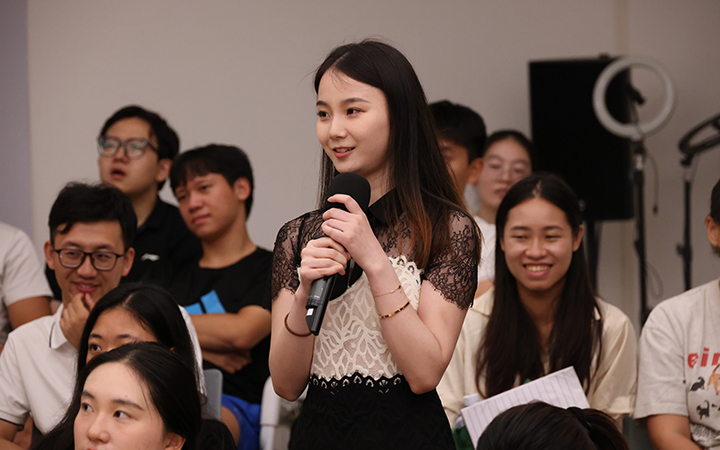
We are rooted in the theory of humanistic psychology and positive behavior support, and promote the transformation of teachers' roles from knowledge transmitters to growth guides and potential inspirers.We Establish a teacher-student relationship based on respect, encouragement and boundaries, deeply interpret the psychology of adolescence, provide a more understanding and supportive growth environment for teenagers, and promote the coordinated development of students' intrinsic motivation and social emotional ability.
Turn the experience sharing of excellent teachers into a part of daily work, and adapt layered training courses according to the work experience of teachers.
Understand each unique individual, and stimulate their inner growth momentum and ability to pursue happiness, so that the wisdom of educating people can be sublimated into the art of education in sincere communication.
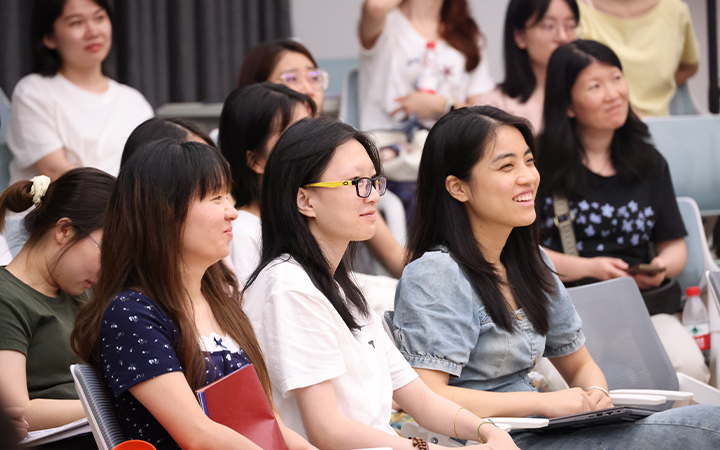
We continue to practice and unite the common spirit of the team in action. For the integration of old and new teachers. We strive to create a safe and supportive professional community atmosphere, build a shared vision and meaning system, and provide deep motivation and direction for individual actions.
Strengthen the professional identity of teachers, let the extraordinary enthusiasm for the cause of education permeate every ordinary moment of daily teaching, and jointly protect the curiosity about the world, the imagination of the unknown and the desire for creation. From Sukhomlinsky's practical wisdom to the cutting-edge insights of contemporary learning science, abstract theories are melted into specific educational situations and finally put into practice.
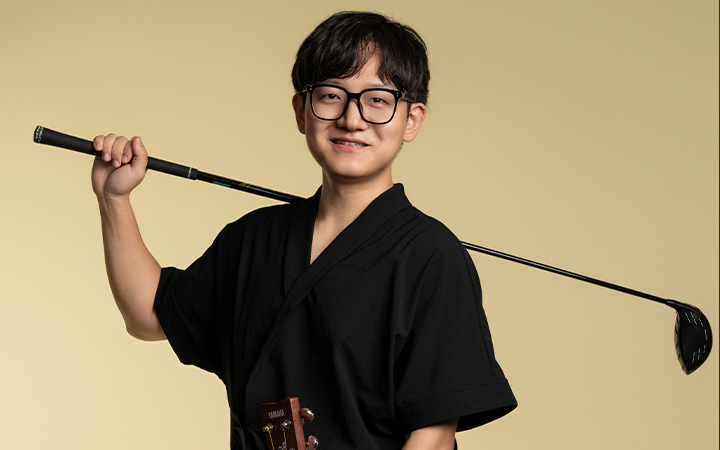
To be honest, I myself am a person who pursues "happiness". Not only personal happiness, but I also hope to bring the feeling of "happiness" to others. I think education is such a thing. My own growth is actually a journey of continuous exploration and "slash".
In the years when I studied economics in the United States, many students around me had clear goals and dared to pursue them, and that kind of atmosphere deeply influenced me. I began to seriously think about what I really like. In fact, I long for the kind of career that can communicate with people's hearts and have warmth. So I decided to take the cross-major postgraduate entrance examination to the Law School of the People's Congress. After graduation, I chose to stand on the podium and get closer to the life I want step by step.During my postgraduate study, I discovered my love for music. I wrote songs and rehearsed with a few friends, and stood on the livehouse stage in Beijing. At that time, I instantly felt that I had made my debut. I especially enjoy the feeling of expressing myself and being listened to. Music is a way to record and show myself, and it is also an outlet for me to release stress.
Unexpectedly, the "official debut" later was in the class. Now, I am a head teacher. When I met my classmates for the first time, I sang a song "Fairy Tale Town" for them. The children said "Wow" as soon as they heard it, and the tense atmosphere in the classroom suddenly dissipated. Haha, I also gained a group of small fans. My personality is to show myself boldly. If there are students in our class who are introverted and shy, I will sue them.He told them, "You should raise your hands bravely. It doesn't matter if you answer wrongly. If others dare not raise your hand, you raise your hand. This is your ability. It is an ability to dare to show yourself!" In the end, they can bravely stand on the stage and perform. I hope every child can have this ability. I will find all kinds of ways to encourage them. I hope they can try, even if it's just a little. Because I believe that as long as they try, they will definitely feel different.
I still insist on many of my hobbies. Many people ask me, "How come you have time?" In fact, my main focus is time management. When I don't have evening self-study, I go to exercise, play golf, badminton, basketball... These can recharge me. When I go back to the dormitory at night, I will play accompaniment and think of some melodies when I take a shower. I have not given up my music creation, and I also enjoy this state.
For me, education is a process of transmission. I hope to have more and more "slashes", and I also want to take my children to experience more possibilities in life. Every child is actually very good, but he just needs to be seen and trusted. And what I can do is to be the light that will never go out behind them.
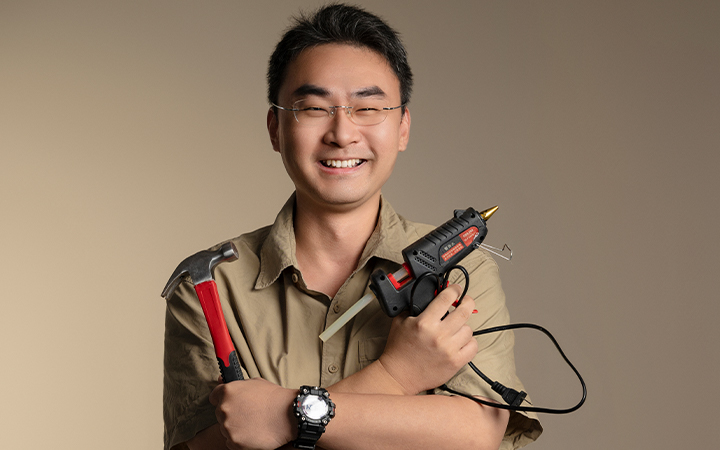
I have been doing chip research and development in a well-known enterprise for several years, but I have always thought about education. I always feel that real learning should not be just brushing questions, taking exams, and printing children out like the same template, but like we do projects, we should have goals, teams, real problems, and take time to do something meaningful.
Later, I really changed my career to become a teacher, and the set of projects in the past was really useful - how to disassemble tasks, how to assign roles, how to control the progress, how to make a project from "0" to "1"... But what is more interesting than making chips is that what I am facing is no longer just modules and codes, but one by one. Fresh students, I like to deal with children, which makes me feel that my sense of happiness has improved significantly.
The project is not like the exam, and it can't be accelerated. In this process, students will encounter countless problems. They need to learn to cooperate, try and make mistakes, persist, and sometimes even dare to push down and stare - which is exercising their comprehensive ability. Take a student of my previous FRC (FIRST International Robot Challenge) as an example. As the captain of the team, during the preparation for the competition, everyone worked overtime and stayed up late to analyze the competition questions, debug the program, and modify the code. He was always full of enthusiasm.After the competition, his interest did not subside. Later, he went to Stanford for further study and joined Professor Li Feifei's laboratory. Since graduating from college, he has still devoted himself to robot-related research and development and innovation. You see, this is the meaning of our insistence on project-based learning: students need to be driven by meaningful and valuable things than mechanical brushing questions. Once they find something they really love, they are willing to sleep and forget to eat for it, and grow into a better self in the process of achieving their goals.
But every child is different. Some children are good at programming, some are good at hands-on ability, and some are good at communicating and leading the team. I put them in the most suitable position for me. I don't want students to just be a "technical tool person", but to be able to find something that is really suitable for themselves and can arouse their interest in the process of learning.Many people don't know what they want to do in their thirties. It seems slow to let their children learn to find and master their own direction when they are young, but in fact, in the long run, it is a very fast way of growth.
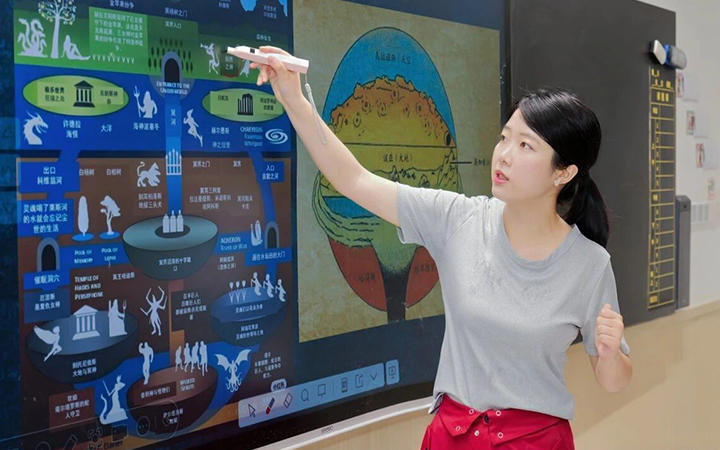
I never thought of being a teacher in the first eighteen years of my life. There are basically all public officials in my family. My father used to be a criminal policeman. When I was a child, I turned over his case books. So for a long time, I felt that I would either study law or become a policeman in the future. What's more, most of the teachers I met before stood on the podium to draw knowledge points, urged me to recite books, and changed papers - quite templated. I don't like that, let alone think that I would become like that.
The real transformation happened when I was a postgraduate study at Nanjing University.While doing academic work, my tutor organized some social practices and led us to develop some "peace education" courses. That was the first time I jumped out of the perspective of "students" to look at education: it turned out that the classroom could not be "teachers talk, students remember", but can discuss together, simulate situations, and even walk out of the classroom. I suddenly felt that the classroom could be "alive".
Later, I really became a teacher. I slowly found that the touching thing about education is that it can really make both teachers and students feel happy. At first, I just wanted to develop a course from the perspective of students. Therefore, I began to delve into the local traditional culture, accidentally came into contact with Yongchun, and was attracted by its minimalist and profound philosophy. Learning and practicing by myself, I feel more and more that this is not a martial art, but a kind of cultural dialogue.Since then, I have been determined to bring more non-heritage content into the classroom in the form of experience and situation. I took the students out of the classroom: ask the inheritor to take everyone to make lanterns, play the Spring Festival, talk about oral history, and walk into the tea garden to make tea by hand.
Slowly, some students began to take the initiative to ask me, "Teacher, what weapon did Huo Daobi use back then?" What kind of array did Qi Jiguang fight against Japan?" - They no longer regard history as a thin year and event, but enter the situation of that era, try to sympathe with specific people and experience the real life.
We teach our children history not to make everyone a historian, but in the hope of planting a small seed in their hearts, so that this subject can accompany them for longer years. Be a childLooking back on this time in middle school, I can think of a moment spent with the history teacher, which was warm, open and happy, and then I will feel that my career is very happy.